
On this page
Adaptive learning platforms use AI and learning analytics to personalize training for every employee. Instead of delivering the same content to everyone, an adaptive learning platform continuously analyzes learner behavior, skills, and performance to adjust learning paths in real time.
In corporate training, this approach helps you close skill gaps faster, improve engagement, and deliver targeted learning at scale. Modern adaptive learning systems combine AI, assessments, and data-driven insights to recommend the right content at the right time.
As organizations focus more on skills-based development, AI adaptive learning is becoming a core capability in next-generation adaptive learning LMS and enterprise learning platforms.
What Is Adaptive Learning?
Adaptive Learning Definition
Adaptive learning is a training approach that dynamically adjusts learning content, pace, and difficulty based on an individual learner’s performance, behavior, and skill level. Instead of delivering the same course to everyone, an adaptive learning platform analyzes how each learner interacts with content and continuously modifies their learning path.
In corporate training, this means your employees don’t waste time on content they already understand. An adaptive learning system identifies knowledge gaps, recommends relevant learning modules, and guides learners toward the skills they actually need.
For example, if a sales employee demonstrates strong product knowledge but struggles with negotiation techniques, an AI adaptive learning platform will automatically prioritize negotiation-focused content instead of repeating basic product training.
Adaptive Learning vs Personalized Learning
The terms adaptive learning and personalized learning are often used interchangeably, but they are not exactly the same.
Personalized learning typically involves customizing training based on learner preferences, roles, or predefined learning paths. While this approach tailors the learning experience, it usually requires manual configuration by administrators or instructional designers.
Adaptive learning, on the other hand, is data-driven and automated. An adaptive learning platform continuously analyzes learner data (such as quiz scores, content engagement, completion rates, and behavioral signals) to automatically adjust the learning journey in real time.
In simple terms, personalized learning is planned customization, while adaptive learning is AI-driven continuous optimization.
Why Adaptive Learning Is Important in Corporate Training
Corporate training programs often struggle with one major challenge: delivering the same learning experience to employees with very different skill levels. Traditional training programs assume everyone starts from the same knowledge baseline, which rarely reflects reality.
This is where adaptive learning platforms make a meaningful difference.
By using AI-powered adaptive learning software, organizations can identify skill gaps and deliver targeted training that improves learning efficiency. Employees spend less time on irrelevant content and more time building the capabilities that matter for their roles.
For L&D teams, adaptive learning also creates stronger visibility into workforce skills. Modern adaptive learning LMS platforms combine assessments, analytics, and AI recommendations to help organizations track skill development, measure learning impact, and align training programs with business outcomes.
What Is an Adaptive Learning Platform?
An adaptive learning platform is a digital learning system that uses data, artificial intelligence, and continuous assessments to personalize training for each learner. Instead of offering static courses, adaptive learning platforms dynamically modify learning paths based on how employees interact with content and perform in assessments.
In corporate training, this means your learning programs evolve in real time. An employee who quickly masters a topic can move ahead to more advanced content, while another learner may receive additional explanations, practice exercises, or microlearning modules.
Modern adaptive learning software is typically integrated within a learning ecosystem (often as part of an adaptive learning LMS) that combines content delivery, skill mapping, assessments, and analytics to support continuous workforce development.
How Adaptive Learning Platforms Work?
At the core, adaptive learning systems analyze multiple learner signals to determine what content should come next. These signals may include assessment scores, time spent on learning modules, interaction patterns, and completion behavior.
Based on this data, the platform dynamically adjusts the learner’s journey. For example, if a learner struggles with a specific concept, the system may recommend additional resources such as videos, simulations, or practice questions. If the learner performs well, the platform can skip repetitive modules and introduce more advanced topics.
This continuous adjustment ensures that training remains relevant, efficient, and aligned with each learner’s needs.
AI and Machine Learning in Adaptive Learning
Artificial intelligence plays a central role in AI adaptive learning. Machine learning algorithms analyze learner data across thousands of interactions to identify patterns in knowledge acquisition and skill development.
Over time, these algorithms become better at predicting what type of content will help a learner improve. For instance, the system may learn that certain employees perform better with scenario-based exercises, while others benefit more from short instructional videos.
By combining AI models with learner behavior data, adaptive learning platforms can deliver highly personalized learning recommendations without manual intervention from administrators.
Role of Data and Learning Analytics
Data is the foundation of any effective adaptive learning platform. Every interaction (whether it is a quiz response, video completion, or content click) creates valuable insights about how employees learn.
Learning analytics tools within adaptive learning systems aggregate this data to generate insights for both learners and L&D teams. Employees receive tailored recommendations that help them progress faster, while learning leaders gain visibility into skill gaps, course effectiveness, and workforce readiness.
For organizations, this data-driven approach transforms corporate training from a static content delivery process into a continuous, measurable, and scalable learning strategy.
Key Components of Adaptive Learning Systems
To understand how an adaptive learning platform personalizes training, it helps to look at the core components that power these systems. Modern adaptive learning systems combine learner data, AI-driven insights, and dynamic content delivery to create highly personalized learning experiences.
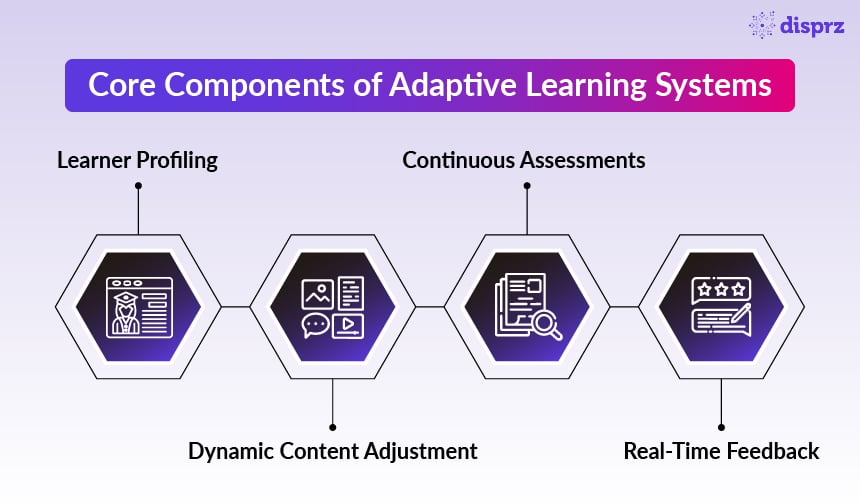
Each component plays a specific role in ensuring that training continuously evolves based on the learner’s progress and skill development.
Learner Profiling
Learner profiling is the starting point of any adaptive learning platform. The system builds a detailed profile of each learner using data such as job role, current skill levels, prior training history, and learning behavior.
For example, a new sales representative and an experienced account manager will likely require very different training journeys. An adaptive learning LMS uses learner profiles to create role-based starting points and recommend relevant content from the beginning.
As learners interact with courses, their profiles evolve with new performance data, helping the system refine future recommendations.
Dynamic Content Adjustment
One of the defining features of adaptive learning platforms is their ability to adjust learning content in real time. Instead of following a fixed course structure, the system modifies the sequence, difficulty level, or type of learning materials based on learner performance.
If a learner struggles with a concept, the adaptive learning software may provide additional explanations, examples, or practice exercises. If the learner demonstrates strong understanding, the platform can move them ahead to more advanced topics.
This dynamic adjustment ensures that training remains efficient and relevant for each individual learner.
Continuous Assessments
Assessments are not just evaluation tools in adaptive learning systems; they are central to how the platform personalizes learning.
Short quizzes, knowledge checks, and scenario-based exercises continuously measure learner understanding. The results help the system identify knowledge gaps and determine what content should come next in the learning path.
This continuous assessment model allows AI adaptive learning platforms to adapt the training journey while the learner is progressing, rather than waiting until the end of a course.
Real-Time Feedback Mechanisms
Effective adaptive learning platforms provide immediate feedback that helps learners improve quickly. When employees answer questions incorrectly or struggle with certain concepts, the platform can offer explanations, hints, or additional resources in real time.
This instant feedback helps reinforce learning and prevents knowledge gaps from accumulating over time.
For L&D teams, these feedback mechanisms also generate valuable insights into learner engagement, content effectiveness, and overall training outcomes within the adaptive learning LMS ecosystem.
Types of Adaptive Learning Platforms (With Examples)
Not all adaptive learning platforms work the same way. Different systems use different mechanisms to personalize learning experiences. Some focus primarily on content sequencing, while others rely heavily on assessments or AI-driven skill analysis.
Understanding these types can help you evaluate which adaptive learning software best fits your corporate training goals.
Content-Based Adaptive Learning
Content-based adaptive learning platforms adjust the sequence and difficulty of learning materials based on how learners interact with content. The system monitors signals such as completion rates, time spent on modules, and engagement patterns to determine what content should come next.
For example, if a learner quickly completes foundational modules in a leadership course, the adaptive learning system may automatically skip introductory lessons and move them to advanced leadership scenarios or case studies.
This type of adaptive learning is commonly used in onboarding and foundational skill development programs where content progression can be dynamically optimized.
Assessment-Driven Adaptive Learning
In assessment-driven adaptive learning systems, continuous evaluations play the central role in shaping the learning journey. The platform frequently tests learner understanding through quizzes, scenario-based exercises, and knowledge checks.
Based on assessment results, the adaptive learning platform decides whether the learner should review additional materials, receive remedial training, or progress to the next topic.
For instance, in compliance training programs, an employee who fails a key knowledge check may automatically receive additional microlearning modules before retaking the assessment. This ensures that critical knowledge gaps are addressed before moving forward.
AI-Powered Skill Gap-Based Learning
The most advanced AI adaptive learning platforms go beyond content sequencing and assessments. They analyze organizational skill frameworks, employee capabilities, and performance data to identify precise skill gaps.
Once these gaps are detected, the adaptive learning platform recommends targeted learning paths designed to build specific capabilities.
For example, if a frontline manager needs stronger coaching skills, the adaptive learning LMS may recommend a mix of microlearning lessons, simulations, and peer learning activities focused on coaching techniques.
This AI-driven, skill based training enables organizations to align adaptive learning directly with workforce skill development and long-term business goals.
Real-World Examples of Adaptive Learning in Corporate Training
The real value of an adaptive learning platform becomes clear when you apply it to practical corporate training scenarios. Instead of static courses, adaptive learning systems continuously adjust training experiences based on employee performance, job roles, and skill requirements.
Here are some common adaptive learning examples used across enterprise learning programs.
Employee Onboarding Programs
Onboarding is one of the most effective use cases for adaptive learning platforms. New hires often come with different levels of prior knowledge, experience, and role expectations.
An adaptive learning LMS can personalize onboarding journeys by adjusting training modules based on employee role, experience level, and early assessment results. For example, a new sales hire with previous industry experience may skip introductory modules and move directly to product positioning and competitive selling.
This ensures employees reach job readiness faster without spending unnecessary time on redundant training.
Sales and Product Training
Sales enablement programs benefit significantly from AI adaptive learning because product knowledge and selling skills vary widely across teams.
An adaptive learning platform can analyze quiz scores, product knowledge assessments, and content engagement to identify gaps in understanding. If a sales representative struggles with certain product features or objection-handling scenarios, the platform can recommend targeted learning modules.
Over time, this continuous learning model helps improve product mastery, confidence, and sales performance.
Compliance and Regulatory Training
Compliance programs are often mandatory and repetitive, which can lead to low engagement. Adaptive learning platforms help make compliance training more efficient by focusing on knowledge gaps rather than forcing employees to complete the same content repeatedly.
For instance, if an employee demonstrates strong knowledge of regulatory policies during early assessments, the adaptive learning system may reduce the number of required modules and focus only on updated regulations or complex scenarios.
This approach maintains compliance standards while improving learner engagement.
Technical Skill Development
Technical training programs (such as cybersecurity, software development, or data analytics) often require continuous skill progression. Adaptive learning software helps tailor training paths based on each learner’s current capabilities.
For example, if an IT professional demonstrates advanced knowledge of cloud architecture but limited understanding of security protocols, the adaptive learning platform can recommend specialized training modules focused on cloud security.
By aligning training directly with skill gaps, organizations can accelerate workforce capability development and improve technical expertise across teams.
Benefits of Adaptive Learning Platforms for Organizations
Adopting an adaptive learning platform can fundamentally change how corporate training programs operate. Instead of delivering the same content to every employee, organizations can create dynamic learning environments that respond to individual skill levels and learning behaviors.
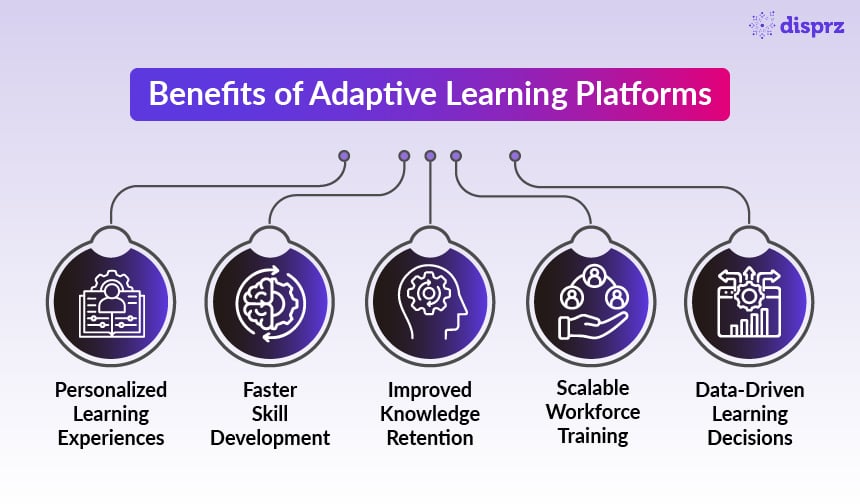
For L&D leaders, adaptive learning platforms help improve engagement, accelerate skill development, and generate meaningful insights about workforce capabilities.
Personalized Learning Experiences
One of the biggest advantages of adaptive learning is its ability to personalize training for every learner. Traditional training programs typically follow a fixed curriculum, which often fails to address individual learning needs.
An adaptive learning platform analyzes learner behavior, performance, and engagement to create tailored learning journeys. Employees receive relevant modules, exercises, and resources based on their specific skill gaps and role requirements.
This level of personalization makes learning more relevant and increases the likelihood that employees will complete their training programs.
Faster Skill Development
Because adaptive learning systems focus on knowledge gaps rather than repeating known material, employees can develop skills more quickly.
For example, if a learner already understands a concept, the adaptive learning software can skip redundant lessons and move them directly to advanced content. Conversely, employees who need additional support can receive extra practice exercises and explanations.
This targeted learning approach reduces training time while improving overall skill acquisition.
Improved Knowledge Retention
Learning retention improves significantly when employees receive targeted content that matches their needs. Adaptive learning platforms reinforce important concepts through repeated assessments, feedback loops, and contextual learning experiences.
By continuously evaluating learner understanding, the adaptive learning LMS ensures that employees revisit key topics until they demonstrate mastery. This ongoing reinforcement helps prevent knowledge decay and improves long-term learning outcomes.
Scalable Workforce Training
As organizations grow, delivering consistent training across large, distributed teams becomes increasingly complex. Adaptive learning platforms enable organizations to scale learning programs without sacrificing personalization.
Because AI adaptive learning systems automate content recommendations and learning adjustments, thousands of employees can receive individualized training experiences simultaneously.
This scalability is particularly valuable for global enterprises with diverse workforce roles and skill requirements.
Data-Driven Learning Decisions
Modern adaptive learning platforms generate detailed learning analytics that help organizations make better training decisions.
L&D teams can track skill progression, identify capability gaps, and evaluate which training modules drive the most impact. These insights allow organizations to continuously refine their learning strategies and align training programs with evolving business goals.
With the right adaptive learning software, corporate training becomes a measurable, data-driven process rather than a static content delivery system.
Challenges Adaptive Learning Platforms Solve
Many organizations invest heavily in corporate training, yet the outcomes often fall short. Traditional training models struggle to keep pace with evolving skill requirements and diverse learner needs.
This is where an adaptive learning platform becomes valuable. By using data, assessments, and AI-driven insights, adaptive learning systems address several common challenges that limit the effectiveness of conventional training programs.
One-Size-Fits-All Training Limitations
Traditional corporate training typically follows a standardized curriculum delivered to all employees, regardless of their experience or skill level.
This one-size-fits-all approach often leads to disengagement. Employees with prior knowledge may find the training repetitive, while others may struggle to keep up with complex topics.
An adaptive learning platform solves this problem by adjusting content dynamically. Learners receive training tailored to their knowledge level, ensuring that each employee progresses at the most appropriate pace.
Employee Skill Gap Identification
Many organizations struggle to accurately identify workforce skill gaps. Without clear insights, training programs often rely on assumptions rather than data.
Adaptive learning systems continuously analyze assessment results, learning behaviors, and performance patterns to identify areas where employees need improvement.
These insights allow L&D teams to deliver targeted training interventions, making adaptive learning software a powerful tool for closing skill gaps across the organization.
Low Engagement in Corporate Training
Employee engagement is one of the biggest challenges in corporate learning programs. Static courses, lengthy modules, and repetitive training formats can reduce motivation and participation.
An adaptive learning LMS improves engagement by making learning more relevant and interactive. Because employees receive personalized content aligned with their needs, they are more likely to stay engaged and complete training programs.
Dynamic learning paths, real-time feedback, and adaptive assessments further enhance the learning experience.
Inefficient Learning Investment
Organizations often invest significant budgets in training programs without clear visibility into outcomes or effectiveness.
Adaptive learning platforms address this challenge by generating detailed learning analytics and performance insights. L&D teams can track progress, measure knowledge improvement, and evaluate how training contributes to workforce capability development.
With these insights, organizations can allocate training resources more effectively and ensure that learning investments deliver measurable business impact.
Common Challenges in Implementing Adaptive Learning
While an adaptive learning platform offers significant benefits for corporate training, implementing these systems requires careful planning. Like any advanced technology, adaptive learning systems come with operational, technical, and ethical considerations that organizations must address.
Understanding these challenges early can help you design a more effective adaptive learning strategy and avoid common implementation pitfalls.
Data Privacy and Security Concerns
Modern adaptive learning platforms rely heavily on learner data to personalize training experiences. These platforms analyze employee performance, engagement patterns, assessments, and skill profiles to generate learning recommendations.
Because of this data dependency, organizations must ensure that their adaptive learning software complies with enterprise security standards and data privacy regulations.
Clear policies around data usage, secure storage practices, and access controls are essential to maintain employee trust and protect sensitive information within the adaptive learning LMS ecosystem.
Technology Infrastructure Requirements
Implementing AI adaptive learning capabilities often requires a strong digital learning infrastructure. Organizations may need to integrate their adaptive learning platform with existing systems such as HR platforms, performance management tools, and learning content repositories.
If the underlying technology ecosystem is fragmented or outdated, integration challenges can slow adoption.
To address this, many organizations choose adaptive learning platforms that support open APIs and seamless integration with enterprise systems, allowing learning data to flow smoothly across the technology stack.
Algorithm Bias and Ethical Considerations
AI-driven adaptive learning systems rely on algorithms to recommend content and personalize learning journeys. However, if these algorithms are trained on incomplete or biased datasets, they may unintentionally produce unfair recommendations.
For example, certain learners might receive fewer advanced opportunities if the system incorrectly interprets their early performance signals.
Organizations implementing adaptive learning platforms should regularly review algorithm outcomes, maintain transparency in how recommendations are generated, and ensure that learning opportunities remain equitable across the workforce.
Addressing these ethical considerations helps organizations build responsible and trustworthy AI adaptive learning ecosystems.
Core Features of Modern Adaptive Learning Platforms (2026)
As enterprise learning evolves, modern adaptive learning platforms are becoming far more intelligent and data-driven. In 2026, leading adaptive learning systems combine artificial intelligence, analytics, and automation to continuously personalize the learning experience.
If you are evaluating adaptive learning software, these are some of the core capabilities that define next-generation platforms.
Real-Time Learning Adaptation
A defining feature of an adaptive learning platform is its ability to adjust learning journeys in real time. Instead of waiting until the end of a course to evaluate performance, the system continuously analyzes learner interactions and adapts content accordingly.
For example, if a learner struggles with a particular topic, the adaptive learning system may introduce additional practice exercises, simplified explanations, or short refresher modules. If the learner performs well, the platform can accelerate progress by skipping repetitive content.
This dynamic adjustment ensures that learning remains relevant and efficient for every employee.
Predictive Learning Analytics
Modern adaptive learning platforms increasingly rely on predictive analytics to anticipate learning needs before they become performance issues.
By analyzing patterns in learner behavior, completion rates, and assessment scores, AI adaptive learning systems can predict where employees may struggle in the future. This allows L&D teams to proactively deliver targeted learning interventions.
Predictive analytics also help organizations forecast workforce skill readiness and measure the long-term impact of training programs.
AI-Powered Content Recommendations
Another critical capability of advanced adaptive learning software is AI-driven content recommendations. Instead of requiring administrators to manually assign training programs, the platform recommends relevant courses and resources automatically.
These recommendations are based on factors such as employee roles, skill profiles, assessment results, and career development goals.
As a result, employees receive personalized suggestions that support both immediate performance improvement and long-term career growth.
Personalized Learning Paths
A modern adaptive learning LMS enables organizations to create dynamic learning paths that evolve as employees progress through training programs.
Rather than following a fixed curriculum, learners move through customized paths that adapt to their strengths and weaknesses. These learning journeys may combine multiple formats such as videos, microlearning modules, simulations, and assessments.
This personalized approach helps employees stay engaged while ensuring that training remains aligned with their skill development needs.
Integration With LMS and HR Systems
For adaptive learning platforms to deliver meaningful impact, they must integrate seamlessly with the broader enterprise technology ecosystem.
Modern platforms typically connect with learning management systems, HR information systems, and performance management tools. These integrations allow learning data, skill profiles, and employee performance insights to flow across systems.
As a result, organizations can align adaptive learning initiatives with workforce planning, talent development strategies, and business performance goals.
Adaptive Learning Platforms vs Traditional Learning Systems
Traditional learning systems were designed primarily to deliver courses at scale. While they helped organizations digitize training, they often lacked the intelligence needed to personalize learning experiences.
An adaptive learning platform, on the other hand, continuously adjusts learning paths based on learner behavior, performance, and skill development. This shift transforms training from static course delivery into a dynamic and data-driven learning experience.
The table below highlights key differences between traditional learning systems and modern adaptive learning platforms.
| Feature | Traditional Learning Systems | Adaptive Learning Platforms |
|---|---|---|
| Learning Approach | Same course content delivered to all learners | Personalized learning paths based on performance and skill gaps |
| Content Progression | Fixed course sequence | Dynamic content adjustment based on learner behavior |
| Assessments | Usually conducted at the end of courses | Continuous assessments that influence learning paths |
| Personalization | Limited or manual customization | AI-driven personalization across the learning journey |
| Learning Insights | Basic completion and progress tracking | Advanced analytics and skill insights |
| Engagement | Often lower due to repetitive content | Higher engagement through relevant, targeted learning |
| Scalability | Scales content delivery but not personalization | Scales both learning delivery and personalization |
Personalization Capabilities
One of the biggest limitations of traditional learning systems is their lack of personalization. Most systems rely on standardized courses that treat all learners the same.
In contrast, adaptive learning platforms personalize learning journeys using AI, learner data, and real-time assessments. Each employee receives a unique learning experience designed around their specific knowledge level and development needs.
Learning Efficiency
Traditional training often requires employees to complete entire courses even if they already understand the material. This leads to wasted time and reduced learner engagement.
With adaptive learning systems, employees focus only on the content they need. The platform automatically skips known topics and prioritizes areas where learners require improvement, making training significantly more efficient.
Scalability and Automation
While traditional LMS platforms can scale course delivery, they typically require manual configuration and administration.
Modern adaptive learning LMS solutions automate many aspects of training, including content recommendations, learning path adjustments, and performance analysis. This automation allows organizations to deliver highly personalized training experiences to thousands of employees simultaneously.
How AI Is Advancing Adaptive Learning
Artificial intelligence is rapidly transforming how adaptive learning platforms operate. Earlier learning systems relied mainly on predefined rules and manual course configurations. Today, the AI-powered learning systems can analyze vast amounts of learner data and continuously improve how training is delivered.
By combining AI, machine learning, and learning analytics, modern adaptive learning systems are able to predict skill gaps, personalize learning paths, and recommend the most effective learning resources.
Generative AI for Learning Content
Generative AI is beginning to play a major role in modern adaptive learning platforms. Instead of relying only on pre-created training materials, AI can generate learning content such as quizzes, summaries, practice scenarios, and microlearning modules.
This allows organizations to scale training content faster while keeping it aligned with evolving skill requirements. For example, an adaptive learning platform can generate additional practice questions for learners struggling with a topic or create quick knowledge refreshers for employees who need reinforcement.
Generative AI also helps L&D teams reduce the time required to develop new training programs.
AI-Powered Skill Mapping
One of the most powerful capabilities of AI adaptive learning is automated skill mapping. AI models can analyze job roles, competencies, and learning data to identify which skills employees currently possess and which ones they need to develop.
This enables organizations to build structured skill frameworks and align adaptive learning software with real business capabilities.
For example, if an organization wants to strengthen digital sales capabilities, the adaptive learning platform can identify employees who need training in areas such as consultative selling, data-driven prospecting, or customer engagement strategies.
Intelligent Learning Recommendations
AI enables adaptive learning platforms to deliver highly accurate learning recommendations. Instead of assigning training manually, the system suggests relevant content based on employee roles, performance data, and learning behavior.
These recommendations may include courses, microlearning modules, videos, simulations, or knowledge resources. Over time, the platform learns which types of content are most effective for different learners and improves recommendation accuracy.
This intelligent recommendation system helps employees discover the right learning resources exactly when they need them.
Predictive Performance Insights
Another major advancement in adaptive learning systems is predictive analytics. By analyzing learning patterns and performance data, AI models can forecast potential skill gaps or performance risks before they impact business outcomes.
For example, if a learner consistently struggles with certain technical concepts, the adaptive learning LMS may predict that additional training will be required before the employee can perform specific job tasks effectively.
These predictive insights allow L&D teams to intervene early and design targeted development programs that support workforce performance and capability growth.
Future Trends in Adaptive Learning Platforms
As organizations move toward skills-based workforce development, adaptive learning platforms are expected to become even more intelligent and personalized. Advances in AI, learning analytics, and immersive technologies are shaping the next generation of adaptive learning systems.
Over the next few years, AI adaptive learning will play a critical role in helping organizations deliver scalable, personalized, and data-driven corporate training.
Hyper-Personalized Learning Journeys
Future adaptive learning platforms will move beyond basic personalization to deliver hyper-personalized learning journeys. Instead of adjusting only course sequences, these systems will continuously refine learning paths based on real-time behavioral data, performance signals, and career development goals.
For example, an adaptive learning LMS may combine role requirements, skill gaps, and career aspirations to recommend highly targeted learning experiences. This level of personalization will make training more relevant and significantly improve learner engagement.
Microlearning with Adaptive AI
Microlearning is already popular in corporate training, but combining it with adaptive learning will make it even more powerful. Instead of static microlearning libraries, adaptive learning platforms will dynamically recommend short learning modules based on learner needs.
For example, if an employee struggles with a specific concept, the adaptive learning system may instantly deliver a short microlearning lesson or practice activity focused on that topic.
This just-in-time learning approach helps employees build skills quickly without disrupting their daily work.
Immersive Learning Experiences (VR/AR)
Emerging technologies such as virtual reality (VR) and augmented reality (AR) are also starting to integrate with adaptive learning platforms.
These immersive learning experiences allow employees to practice real-world scenarios in safe digital environments. For instance, sales professionals may practice customer conversations, while technicians may simulate equipment troubleshooting tasks.
When combined with AI adaptive learning, these immersive environments can adjust difficulty levels and scenarios based on learner performance, creating highly engaging training experiences.
Skills-Based Workforce Transformation
Many organizations are shifting toward skills-based workforce strategies. Instead of focusing only on job titles, organizations are increasingly tracking and developing specific capabilities across their workforce.
Adaptive learning systems support this shift by continuously mapping employee skills, identifying capability gaps, and recommending targeted development programs.
As a result, adaptive learning platforms are becoming central to workforce transformation initiatives, helping organizations build agile, future-ready talent pipelines.
How Adaptive Learning Platforms Support Corporate L&D Strategy
For modern organizations, learning is no longer limited to periodic training programs. It is becoming a continuous capability-building process aligned with business goals. Adaptive learning platforms play a critical role in enabling this shift by helping L&D teams deliver targeted, scalable, and measurable learning experiences.
By using AI adaptive learning, organizations can align training initiatives with workforce skills, leadership development, and long-term talent strategies.
Upskilling and Reskilling Initiatives
As industries evolve rapidly, organizations must continuously upgrade workforce capabilities. Adaptive learning systems help support large-scale upskilling and reskilling initiatives by identifying employee skill gaps and recommending relevant training programs.
Instead of assigning generic courses, an adaptive learning platform analyzes individual capabilities and delivers targeted learning paths that build specific skills. This ensures employees spend time developing competencies that directly support business priorities.
Over time, this data-driven approach allows organizations to strengthen critical skills across the workforce.
Leadership Development Programs
Leadership training programs often struggle to address the diverse development needs of emerging leaders. Some managers may need stronger communication skills, while others require strategic decision-making capabilities.
Adaptive learning platforms help personalize leadership development journeys by analyzing learner performance and recommending targeted modules.
For example, an adaptive learning LMS may provide different learning paths for first-time managers, senior leaders, or high-potential employees. This ensures that leadership training remains relevant and aligned with each individual’s development needs.
Continuous Learning Culture
Building a culture of continuous learning requires more than just offering training programs. Employees need access to relevant learning resources that support ongoing development.
Adaptive learning software helps create this environment by recommending learning content based on employee roles, skills, and career goals.
Because adaptive learning platforms continuously analyze learner behavior and performance data, they can suggest timely learning opportunities that encourage employees to keep developing their skills. Over time, this helps organizations embed learning into everyday work and build a sustainable culture of growth.
How Disprz Uses AI for Adaptive Learning
Modern organizations need more than static training systems. They need intelligent platforms that can continuously adapt learning experiences based on employee roles, skills, and performance. This is where platforms such as Disprz bring AI-driven capabilities into enterprise learning ecosystems.
AI-Powered Learning Paths
Disprz uses AI adaptive learning to automatically generate learning paths based on employee roles, skill requirements, and performance signals. Instead of assigning the same training to everyone, the platform recommends targeted learning modules aligned with individual development needs.
As learners interact with content, the adaptive learning platform continuously adjusts their learning journey to ensure they focus on the most relevant skills.
Role-Based Learning Journeys
One of the strengths of an effective adaptive learning LMS is its ability to align training with job roles. Disprz enables organizations to create role-based learning journeys that map specific skills and competencies to different functions.
For example, frontline sales teams, customer support agents, and managers can each receive tailored learning experiences designed around their daily responsibilities.
This role-driven approach ensures that learning directly supports real workplace performance.
Skill Intelligence
Disprz incorporates skill intelligence capabilities within its adaptive learning systems. The platform continuously analyzes learner data, assessments, and skill signals to identify workforce capability gaps.
By mapping skills across the organization, L&D teams can better understand where development efforts are needed and design targeted training programs that strengthen critical competencies.
This makes adaptive learning a strategic tool for workforce capability building.
Learning Analytics Dashboards
Data visibility is essential for effective corporate training. Disprz provides detailed learning analytics dashboards that help organizations track learner engagement, skill progression, and training outcomes.
These analytics allow L&D teams to evaluate how their adaptive learning software is impacting workforce performance and identify opportunities to improve learning programs.
Explore how Disprz’s AI-powered adaptive learning platform delivers personalized learning journeys, skill intelligence, and scalable workforce development. Book a demo today.

Key Takeaways
1) An adaptive learning platform personalizes corporate training by adjusting learning paths, content, and pace based on individual learner performance and skill gaps.
2) Modern adaptive learning systems use AI, learning analytics, and continuous assessments to deliver highly targeted learning experiences at scale.
3) Organizations use adaptive learning platforms to accelerate employee onboarding, improve sales enablement, strengthen compliance training, and support technical skill development.
4) AI adaptive learning enables faster skill development by identifying knowledge gaps early and recommending targeted learning interventions.
5) Compared to traditional LMS platforms, adaptive learning LMS solutions provide better personalization, stronger learner engagement, and measurable skill development insights.
6) Learning analytics within adaptive learning software help L&D teams track skill progression, measure training impact, and optimize learning investments.
7) As organizations move toward skills-based workforce strategies, adaptive learning platforms are becoming a core capability for scalable corporate training.
Conclusion
Corporate learning is rapidly shifting from standardized training programs to personalized, skill-focused development. This shift is where the adaptive learning platform plays a transformative role. By combining AI, data analytics, and continuous assessments, adaptive learning platforms help organizations deliver training that adapts to each employee’s needs.
Instead of forcing employees through the same learning journey, adaptive learning systems focus on individual skill gaps and performance improvement. This makes corporate training more efficient, engaging, and aligned with real business outcomes.
As organizations continue to invest in upskilling and reskilling, AI adaptive learning will become a critical capability for building agile, future-ready workforces and scalable corporate learning ecosystems.
FAQs About Adaptive Learning Platforms
1) What is adaptive learning?
Adaptive learning is a training approach that uses data, assessments, and AI to personalize learning experiences. An adaptive learning platform continuously analyzes learner performance and adjusts content, pace, and difficulty to match individual knowledge levels and skill gaps.
2) How do adaptive learning platforms work?
Adaptive learning platforms analyze learner behavior, assessment results, and engagement patterns. Using AI and learning analytics, the system dynamically adjusts learning paths, recommends relevant content, and provides additional resources when learners struggle with specific concepts.
3) What are examples of adaptive learning?
Common adaptive learning examples include personalized employee onboarding programs, sales enablement training that adapts based on product knowledge scores, compliance training that adjusts based on assessment results, and technical training paths tailored to individual skill gaps.
4) What is the difference between adaptive learning and personalized learning?
Personalized learning typically involves predefined learning paths tailored to roles or preferences. Adaptive learning, however, uses AI and real-time data to automatically adjust learning content and difficulty based on each learner’s performance and progress.
5) What are the benefits of adaptive learning platforms?
Adaptive learning platforms help organizations deliver personalized training, accelerate skill development, improve knowledge retention, increase learner engagement, and provide data-driven insights that help L&D teams optimize corporate training programs.
6) How is AI used in adaptive learning platforms?
AI powers adaptive learning by analyzing learner data, predicting skill gaps, recommending relevant content, and dynamically adjusting learning paths. These capabilities allow AI adaptive learning systems to continuously personalize training experiences.
7) Which industries use adaptive learning platforms?
Adaptive learning platforms are widely used across industries including banking, healthcare, technology, retail, manufacturing, and insurance. These sectors use adaptive learning LMS solutions to scale workforce training, support compliance, and develop critical skills.