

On this page
Artificial intelligence (AI) and AI tools have become focal points of discussion across various industries, sparking questions about their potential to reshape the workforce. As concerns linger about whether AI will eventually replace human intelligence entirely or if it will generate more jobs than it displaces, one thing remains certain: AI is rapidly changing the world. Its impact is felt across sectors, niches, and especially in the realm of Learning and Development (L&D) professionals. A recent survey revealed that 79% of corporate strategists consider technologies like analytics, AI, and automation critical to their success over the next two years (Gartner, 2023).
A decade ago, L&D was characterized by rigid, one-size-fits-all methods that struggled to keep pace with evolving skill requirements and technological advancements. Fast forward to today, and AI has emerged as a game-changer, offering personalized, adaptive, and scalable learning experiences tailored to the needs of the next-gen workforce.
Challenges with Traditional L&D Approaches
Inefficiencies in Traditional Training Methods
Conventional training methods, such as classroom-based instruction or static eLearning modules, are often inefficient and fail to optimize learning outcomes. These methods need more interactivity, real-time feedback, and hands-on experiences, which often lead to low engagement and knowledge retention among learners.
Lack of Personalization and Engagement
One-size-fits-all training programs do not resonate with modern employees' individual learning preferences and career aspirations.
Slow Adaptation to Emerging Technologies
Traditional approaches struggle to keep pace with emerging trends shaping the modern workplace, hindering organizational agility and growth.
How Does AI-Driven L&D Address These Challenges?
Enhanced Personalization
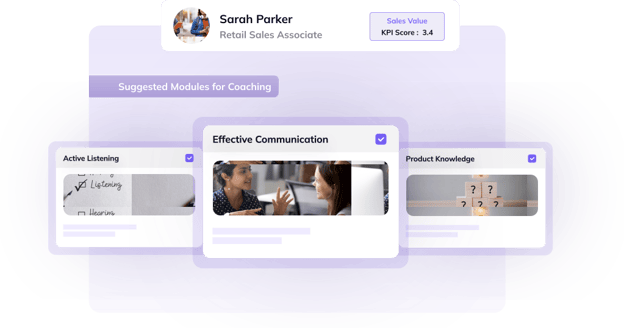
AI algorithms analyze vast amounts of data to understand individual learning preferences, behaviors, and performance patterns. By leveraging these insights, AI-driven solutions, such as Disprz, can deliver highly personalized learning experiences tailored to each learner's unique needs, interests, and skill levels.
Figure 1: Disprz personalized learning journey
Adaptive Learning Paths
AI-powered adaptive learning solutions dynamically adjust the content, pace, and delivery of training materials based on learners' progress and performance. These systems continuously assess learners' strengths, weaknesses, and learning styles, automatically adapting the curriculum to suit their individual needs.
Real-Time Feedback and Analytics
AI-enabled L&D solutions provide real-time feedback and analytics, allowing organizations to monitor learners' progress, identify areas for improvement, and measure the effectiveness of training initiatives.
Generative AI for Personalized Content Requirements
Leveraging Generative AI (GenAI) in L&D can be beneficial for the next-generation workforce, which is naturally inclined towards technology and digital learning experiences. Organizations can leverage GenAI for smart search by using AI algorithms to understand search queries and offer more relevant and personalized results.
4 Steps for Successful Integration
Successful integration of AI-driven solutions into L&D initiatives requires a strategic approach.
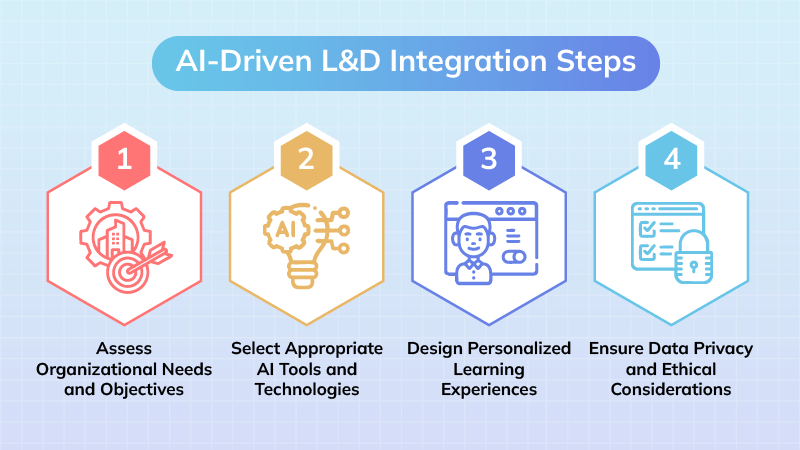
Here are four key steps to ensure a smooth and effective integration
1) Assess Organizational Needs and Objectives
Begin by conducting a comprehensive assessment of your organization's L&D requirements and strategic goals. Identify areas where AI-driven solutions can add the most value, such as improving learner engagement, enhancing skill development, or addressing skills gaps. Engage with stakeholders across departments to gather insights and ensure alignment with broader business objectives.
2) Select Appropriate AI Tools and Technologies
Evaluate available AI tools and technologies to determine which ones best align with your organization's needs and goals. Consider factors such as scalability, compatibility with existing systems, ease of integration, and vendor support. Choose solutions that offer robust features for personalized learning, adaptive content delivery, and real-time analytics to maximize the impact of your L&D initiatives.

3) Design Personalized Learning Experiences
Collaborate with L&D professionals and subject matter experts to design personalized learning experiences tailored to the diverse needs and preferences of your workforce. Leverage AI-powered solutions to create customized learning paths that cater to individual learning styles, interests, and skill levels. Incorporate interactive elements, gamification, and multimedia content to enhance employee engagement and maximize knowledge retention among learners.
4) Ensure Data Privacy and Ethical Considerations
Prioritize data privacy and ethical considerations throughout the integration process. Implement robust data governance practices to safeguard sensitive learner information and ensure compliance with relevant regulations, such as GDPR or CCPA. Transparently communicate data usage policies to learners and stakeholders, providing them with control over their data. Regularly review and update security measures to mitigate potential risks and maintain trust in the AI-driven L&D ecosystem.
Best Practices for Implementing AI-Powered Learning
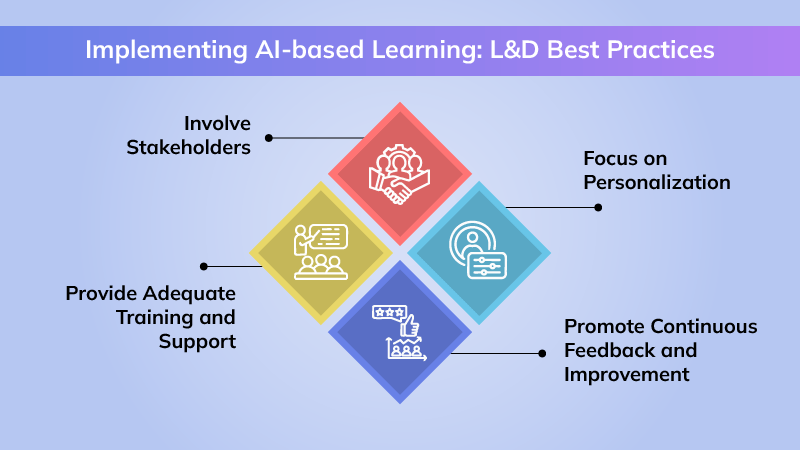
Involve Stakeholders
Involve key stakeholders, including L&D professionals, HR teams, IT departments, and end-users, in the decision-making process. Gain insights into their needs, expectations, and concerns to ensure alignment and buy-in throughout the implementation process.
Provide Adequate Training and Support
Offer comprehensive training and support to employees and administrators who will be using AI-driven L&D solutions. Ensure they understand how to leverage the technology effectively and maximize its benefits in their learning journey.
Focus on Personalization
Leverage AI algorithms to deliver personalized learning experiences tailored to individual learner preferences, interests, and skill levels. Utilize data analytics to track learner progress, identify areas for improvement, and adapt content accordingly to optimize engagement and knowledge retention.
Promote Continuous Feedback and Improvement
Establish mechanisms for gathering feedback from learners and administrators on the effectiveness of AI-driven L&D solutions. Use this feedback to iterate on strategies, refine content, and improve the overall learning experience continuously.
Conclusion
The shifting landscape of the workforce, especially with the emergence of Generation Z, underscores the critical need for organizations to adapt and evolve their approaches to L&D. Gen Z employees bring with them a set of expectations and preferences that demand a departure from traditional methods.
Flexibility, autonomy, and continuous learning opportunities are no longer just preferences but
essential elements of a fulfilling professional journey for the Gen Z workforce. They crave purposeful work environments that offer personalized learning experiences, robust career development pathways, and avenues for skill enhancement and growth.
To meet these evolving demands head-on, organizations must embrace cutting-edge technologies, with AI at the forefront, within their L&D function. AI-driven solutions offer personalized, adaptive, and scalable learning experiences that resonate with the diverse needs and aspirations of the next-generation workforce.
By leveraging AI in L&D, organizations can not only cater to the dynamic demands of Gen Z employees but also foster a culture of continuous learning, innovation, and growth.
To delve deeper into how AI can transform your L&D initiatives and unlock the full potential of your workforce, download our latest purple paper. Discover actionable insights, best practices, and practical strategies for harnessing the power of AI in L&D.