

On this page
Strong retail management skills are critical for success in 2026. In this guide we will discuss 8 essential store manager skills: multitasking, time management in retail, decision-making, leadership, organization, communication, motivation, and customer service.
We will also cover 4 frontline retail skills that directly impact customer experience in retail, employee engagement, and sales performance across diverse store environments.
With rising complexity, structured retail training programs, ongoing upskilling, and personalized learning plans are key to building future-ready retail leaders and high-performing frontline teams that drive measurable results.
What is Retail Management?
Retail management refers to the end-to-end process of running and overseeing retail operations to ensure a store functions efficiently and profitably. It includes managing inventory, supervising staff, declivering consistent customer experience in retail, handling merchandising, and ensuring smooth day-to-day store operations.
Effective retail management balances people, processes, and products to meet customer expectations while achieving business goals such as sales growth, cost control, and brand consistency. In today’s competitive landscape, it also involves data-driven decision-making, sales management in retail, and the use of digital tools to track performance, monitor customer behavior, and optimize both online and offline retail operations.
Strong retail management skills help organizations respond quickly to market changes, reduce operational inefficiencies, and build loyal customer relationships. Additionally, managers must implement effective training programs, foster employee engagement, and leverage analytics to anticipate trends.
Ultimately, successful retail management creates a seamless in-store experience that drives repeat visits, maximizes revenue opportunities, and ensures long-term profitability.
What Does a Retail Manager Do?
A retail manager plays a multifaceted role that blends leadership, operations, and sales management in retail. Beyond overseeing daily store activities, the store manager is responsible for driving team performance, maintaining service standards, and ensuring the store meets its revenue and profitability targets.
Strong store manager skills are essential to balance people management with operational efficiency in a fast-paced retail environment.
Team Management
- Hiring, onboarding, and training retail staff
- Scheduling shifts and supervising daily performance
- Coaching employees to build frontline retail skills and improve productivity
Customer Service
- Handling customer complaints and escalations professionally
- Ensuring consistent service quality and positive customer experience in retail
- Setting service benchmarks and reinforcing customer-centric behavior
Inventory Control
- Monitoring stock levels to avoid overstocking or stockouts
- Coordinating ordering and replenishment based on demand
- Reducing shrinkage and maintaining inventory accuracy
Store Operations
- Managing day-to-day operations such as opening, closing, and store upkeep
- Ensuring compliance with safety, hygiene, and brand standards
- Coordinating with vendors and support teams when required
Sales and Profit (Sales Management)
- Setting and tracking sales targets and KPIs
- Analyzing sales performance and optimizing promotions
- Managing budgets and margins to ensure store profitability
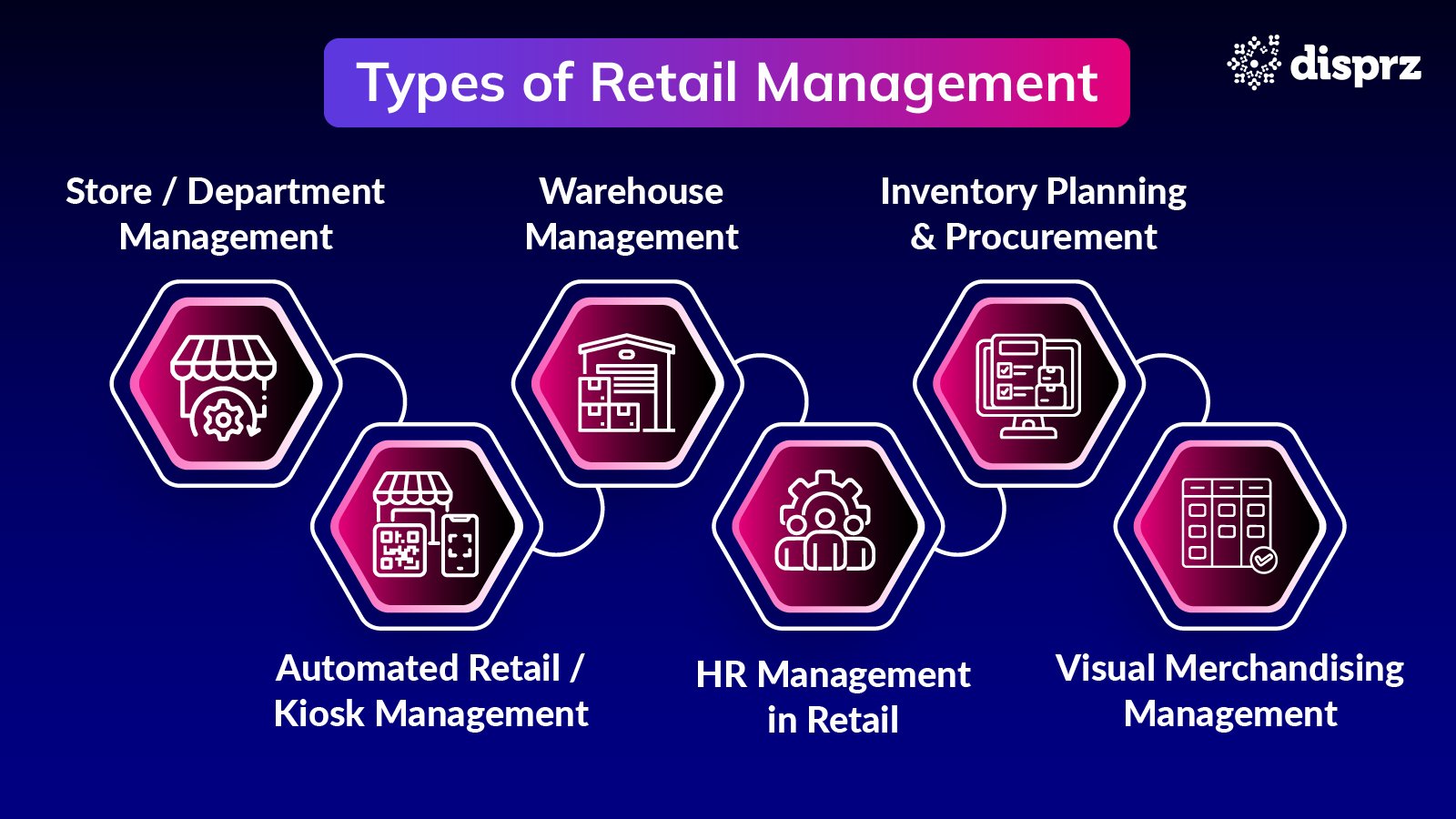
What are the Different Types of Retail Management?
Retail management spans multiple functional areas, each contributing to smooth operations, strong customer experience, and sustainable growth.
Depending on the retail format and scale, organizations may focus on one or more of the following types of retail management:
What are the Key Challenges in Retail Management?
Retail is a fast-paced and highly competitive industry where managers must constantly adapt to shifting customer expectations, workforce dynamics, and market trends. These pressures make retail management both demanding and complex. Some of the most common challenges include:
1. Job Complexity
Retail managers wear multiple hats such as leader, problem solver, operations head, and sales driver. Balancing these responsibilities often leads to long working hours, high stress, and the need for strong multitasking and time management in retail. In addition, managers must simultaneously handle staffing gaps, customer escalations, compliance requirements, and performance reporting, often with limited resources and tight timelines.
2. High Employee Turnover
Retail experiences some of the highest attrition rates, especially among frontline staff. Frequent hiring and onboarding make it difficult to maintain consistent service quality and team productivity without structured retail training programs. High turnover also increases recruitment costs, disrupts team morale, and places added pressure on managers to continuously coach new employees while meeting daily sales targets.
3. Constant Industry Evolution
Digital transformation, omnichannel retailing, and rising customer expectations require managers to continuously upgrade their skills. Keeping pace with new tools, technologies, and sales strategies is a constant challenge. Managers must adapt to new POS systems, data-driven decision-making, and evolving customer engagement models while ensuring teams are trained and aligned with these changes.
4. Inadequate Experience
Many store managers are promoted from frontline roles without sufficient preparation. Gaps in leadership, sales management in retail, or people management skills can directly impact store performance and customer satisfaction. Without proper training, new managers may struggle with conflict resolution, performance coaching, and strategic planning, leading to inefficiencies and disengaged teams.
These challenges highlight a common gap across retail organizations: the lack of a structured, scalable way to build managerial and frontline capabilities consistently across locations. This is where a retail-specific learning management system plays a critical role in standardizing training, accelerating onboarding, and reinforcing performance on the job.
What are the Key Skills Retail Managers Need for Success in 2026?
To overcome the challenges of a fast-changing retail environment, store managers must develop a strong mix of operational, leadership, and people-focused capabilities.
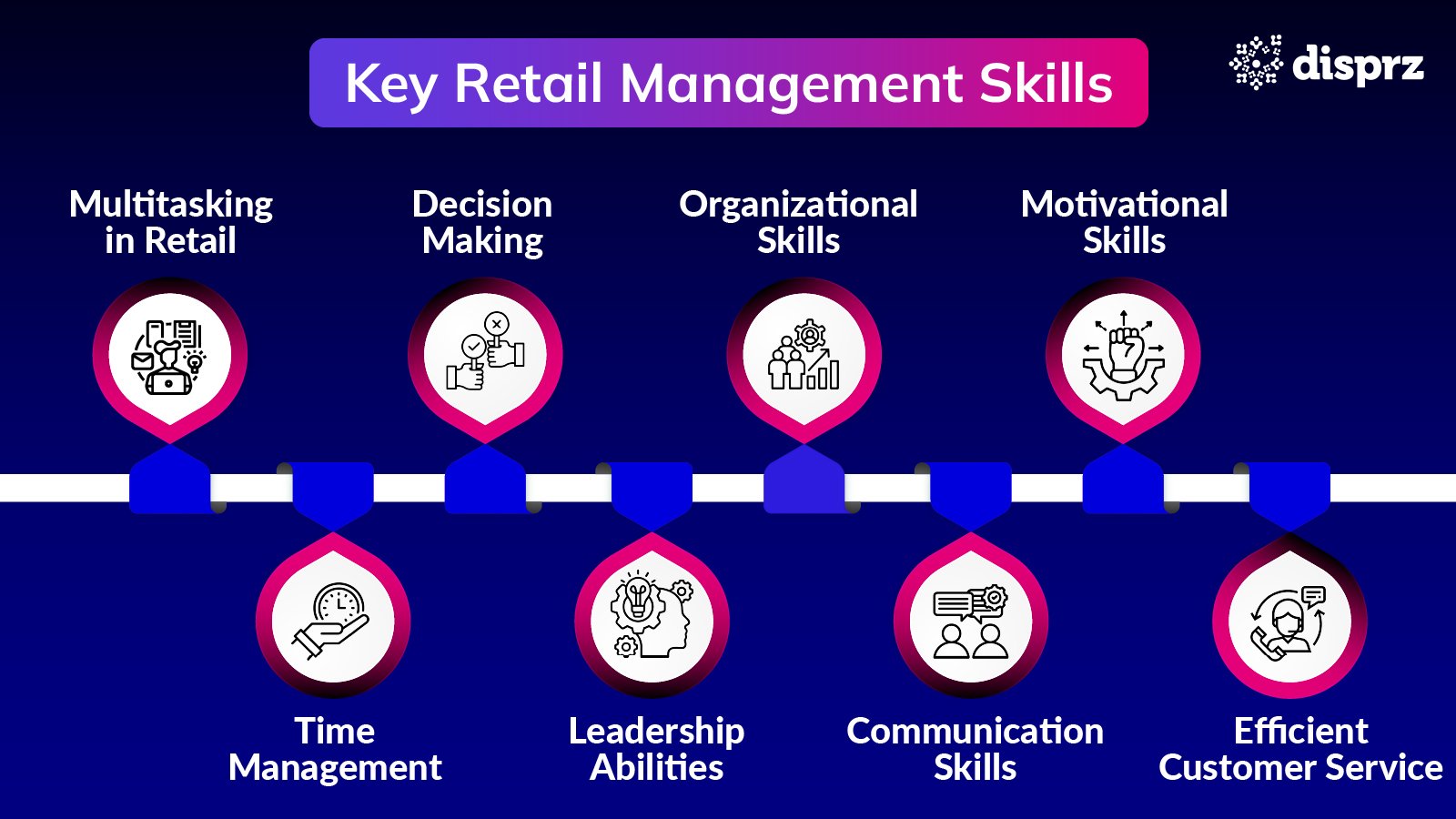
These skills needed for retail management enable managers to lead teams effectively, deliver superior customer experience, and drive consistent sales performance.
Providing proper training and personalized learning pathways for retail managers is critical to building these skills. Targeted development programs help managers strengthen weaker areas while accelerating mastery of their core strengths; leading naturally into the need for structured store management training.

What are the Essential Frontline Retail Skills for Sales Success in 2026?
Frontline employees are the face of the brand and play a direct role in shaping customer experience in retail and influencing purchase decisions. Building the right frontline retail skills is essential for driving sales, loyalty, and repeat business.
Investing in training for these frontline skills boosts brand loyalty, improves customer experience, and increases sales. Upskilling with a modern learning platform like Disprz empowers frontline teams to consistently perform at their best.
How to Develop Retail Management Skills (Store Management Training)
In today’s rapidly evolving retail landscape, continuous learning is no longer optional. Structured retail training programs are essential for building both retail management skills and frontline retail skills that directly impact store performance, customer experience, and sales.
Modern retail demands ongoing upskilling through a mix of workshops, digital learning, coaching, and on-the-job practice. Well-designed training programs help managers strengthen leadership, sales management in retail, and time management skills, while enabling frontline staff to deliver consistent service and product expertise.
A personalized learning pathway is especially effective in retail environments. By identifying individual skill gaps and strengths, personalized training ensures that each store manager or employee receives relevant contraintent; leading to faster learning and better long-term skill retention.
To reinforce learning in real-world scenarios, retailers must adopt microlearning and blended learning approaches. Short, focused modules, on-the-job exercises, and mentorship programs help employees apply skills such as leadership, customer handling, and product knowledge directly on the sales floor.
Leading retailers across SEA and the GCC use platforms such as Disprz’s AI-powered LXP (Learning Experience Platform) to implement these training strategies at scale. Such platforms enable organizations to assign customized learning paths, track skill development through analytics, and reinforce learning with daily micro-tasks, ensuring that training translates into on-the-job performance.
By prioritizing store manager and frontline training, retailers can directly improve customer experience and sales. Learn how Disprz can help your retail teams master the skills needed for sustained success.
Key Takeaways
Conclusion
Effective retail management is the linchpin of retail success in 2026. A skilled retail manager elevates the performance of the entire store team, improving productivity, reducing inefficiencies, and driving stronger sales through consistent, high-quality customer service.
As the retail sector continues to evolve with digital transformation and rising customer expectations, both retail management skills and frontline retail skills become even more critical. Managers must lead change confidently, adopt new tools quickly, and ensure their teams are aligned with shifting customer needs. Continuous upskilling also enables managers to anticipate market trends, optimize operations, and maintain a competitive edge in an increasingly complex retail environment.
Only well-trained, forward-thinking retail leaders can successfully implement new processes, technologies, and safety measures while identifying fresh opportunities for growth and profitability. That’s why leading retail brands trust Disprz to upskill their managers and frontline staff, turning learning into measurable business outcomes that improve sales, team performance, and customer loyalty.
If you’re ready to strengthen your retail workforce, enhance operational efficiency, and build future-ready teams, let’s talk about how Disprz can help you achieve sustainable retail success.