

On this page
A Learning Experience Platform (LXP) is an AI-powered employee learning platform that personalizes skill development by recommending learning content based on each employee's role, skills, interests, and career goals. Unlike a traditional Learning Management System (LMS), which primarily assigns and tracks mandatory training, an LXP helps employees discover relevant learning, develop new skills, and continuously improve throughout their careers.
In 2026, learning is no longer about assigning courses and hoping employees complete them. L&D leaders need learning experiences that are personalized, skills-driven, mobile-first, and closely tied to business outcomes. That is why more organizations are adopting Learning Experience Platforms to improve employee engagement, accelerate upskilling, and build a future-ready workforce.
A modern LXP platform helps employees discover relevant learning, build the right skills faster, and take greater ownership of their development. At the same time, it gives L&D teams better visibility into skill gaps, learning engagement, and workforce readiness. Many organizations now combine an LMS LXP approach to manage compliance training while delivering personalized upskilling at scale.
Whether you are exploring what an LXP is, comparing an LMS vs LXP, evaluating different Learning Experience Platforms, or looking for the best enterprise LXP software, this guide covers everything you need to know.
This guide is designed for L&D leaders, HR teams, and business decision-makers who want to understand the true LXP meaning, evaluate an enterprise LXP, and make informed decisions about their learning technology strategy in 2026.
What is a Learning Experience Platform (LXP)?
A Learning Experience Platform (LXP) helps employees discover, consume, and share learning content based on their skills, interests, job roles, and career aspirations. Unlike a traditional LMS, which focuses on assigning and tracking courses, a learning experience platform delivers personalized learning recommendations that adapt to each learner's needs.
For example, when a new sales manager logs into an LXP platform for the first time, they may see a personalized learning feed with recommended courses, skill assessments, coaching resources, and learning paths tailored to their role. The platform can also identify skill gaps and suggest relevant content to help them improve performance faster.
AI-based learning platforms helps organizations move beyond one-size-fits-all training. A modern enterprise LXP uses AI, skills intelligence, and learning analytics to create personalized learning experiences at scale and build a culture of continuous learning.
At its core, an LXP helps organizations connect learning with business outcomes by understanding employee skills, identifying development needs, and recommending the right learning opportunities at the right time.
What Does an LXP Enable for L&D Leaders?
A leading corporate learning experience platform helps L&D teams:
- Gain visibility into workforce skills and understand readiness across critical roles
- Accelerate skill development through personalized learning experiences aligned to business goals
- Increase learning engagement and adoption by delivering relevant content to every learner
By combining skills intelligence, AI-powered recommendations, and continuous learning, an LXP software platform helps organizations build a future-ready workforce while improving the effectiveness of learning investments.
LMS vs LXP: Things You Must Know
What is the difference between LMS and LXP?
An LMS is designed to deliver, manage, and track training programs assigned by the organization. An LXP is designed to personalize learning by recommending content based on each employee's skills, interests, role, and career goals. In simple terms, an LMS manages learning, while an LXP platform improves the learning experience and supports continuous skill development.
| Feature | LMS | LXP |
|---|---|---|
| Content Curation | Relies primarily on administrator-assigned courses and training programs. | Aggregates and curates content from multiple sources, including internal content, external libraries, videos, articles, and user-generated content. |
| Personalization | Provides limited personalization, with most learners receiving the same assigned learning. | Uses AI and skills data to deliver personalized learning recommendations and learning paths for each employee. |
| Skill-Based Learning | Focuses mainly on course completion, certifications, and compliance requirements. | Focuses on skill development, skill gap closure, career growth, and workforce capability building. |
| Continuous Learning | Supports structured learning events that are typically assigned at specific times. | Encourages continuous learning through ongoing content recommendations, microlearning, and self-directed learning. |
| User Experience | Designed primarily for administrators to manage and track training. | Designed around the learner, with intuitive discovery, personalized feeds, social learning, and a consumer-grade experience. |
When Should You Use Both LMS and LXP?
Many organizations do not replace their LMS when they adopt an LXP. Instead, they use an LMS LXP approach where the LMS manages compliance training, certifications, and mandatory learning, while the learning experience platform drives personalized learning, upskilling, and reskilling initiatives.
For enterprises looking to balance compliance and capability development, an integrated LMS LXP strategy often delivers the best results.
Key Benefits of a Learning Experience Platform
A modern learning experience platform helps organizations move beyond course delivery and create a culture of continuous learning. By combining AI-powered personalization, skills intelligence, and content discovery, an LXP can improve both learner outcomes and business performance.
Here are some of the most important benefits of a learning experience platform.
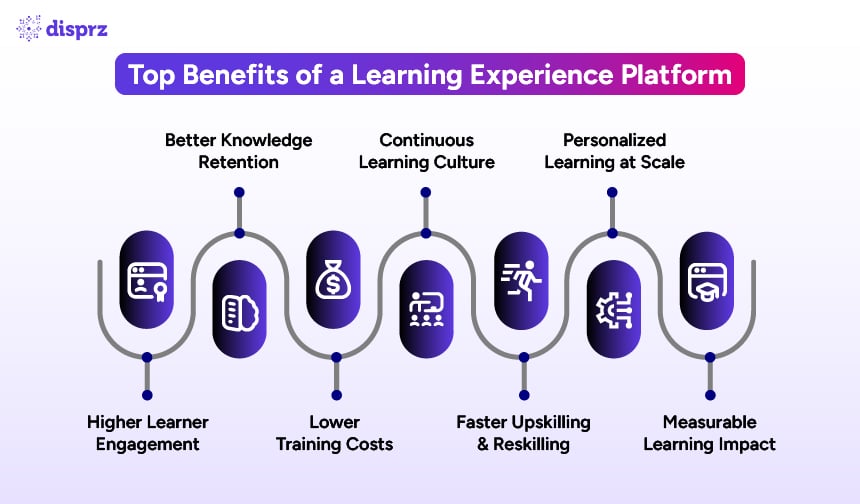
1. Increases Learner Engagement
One of the biggest challenges for L&D teams is keeping employees engaged in learning. Traditional training programs often struggle because learners receive the same content regardless of their role or development needs.
An LXP platform solves this by delivering personalized learning recommendations based on skills, career goals, and learning behavior. When learning feels relevant, employees are more likely to participate and continue learning.
According to Hyperspace, personalized learning content can boost learner engagement by up to 50%, highlighting the impact of personalization on engagement.
2. Improves Knowledge Retention
Employees are more likely to retain information when learning is delivered in smaller, relevant, and easily accessible formats.
Most LXP systems support microlearning, personalized learning paths, and continuous reinforcement. This allows employees to learn in the flow of work instead of relying on one-time training events.
Research from Brandon Hall Group highlights that microlearning helps reinforce learning over time and supports stronger retention by making learning part of everyday work.
3. Reduces Training Costs
Creating and delivering classroom-based training at scale can be expensive, especially for large and distributed workforces.
A corporate learning experience platform enables organizations to centralize content, reuse learning assets, and scale learning digitally across teams and locations. This reduces dependency on instructor-led training while increasing learning reach.
Brandon Hall Group research shows that organizations can achieve better personalization while reducing content development costs through modern digital learning approaches.
4. Supports Continuous Learning
Learning is no longer a once-a-year event. Employees need to build new skills continuously as business priorities, technologies, and job roles evolve.
An enterprise LXP keeps learning active through ongoing recommendations, skill-based learning journeys, and personalized content feeds. Employees can access learning whenever they need it, helping them stay current in a rapidly changing workplace.
5. Accelerates Upskilling and Reskilling
As upskilling requirements continue to evolve, organizations need faster ways to prepare employees for new responsibilities.
An LXP software platform helps identify skill gaps and recommend targeted learning experiences. This enables employees to develop critical capabilities faster and helps organizations build a future-ready workforce.
According to Josh Bersin's corporate learning research, 74% of companies say they are not keeping up with the demand for new skills, highlighting the growing need for skills-focused learning platforms.
6. Enables Personalized Learning at Scale
Every employee has different learning needs, career aspirations, and skill gaps. Delivering personalized development manually becomes difficult as organizations grow.
An LXP uses AI and skills intelligence to personalize learning experiences for thousands of employees simultaneously. This helps organizations provide relevant learning without increasing administrative effort.
LinkedIn research found that 78% of learners want course recommendations based on their career goals and skill gaps, reinforcing the demand for personalized learning experiences.
7. Provides Better Visibility into Learning Impact
L&D leaders need more than course completion data. They need visibility into engagement, skill development, and business impact.
Modern LXP reporting capabilities provide insights into learning activity, content effectiveness, skill progression, and workforce readiness. This allows L&D teams to make data-driven decisions and demonstrate the value of learning investments more effectively.
By leveraging learning analytics, organizations can connect L&D initiatives to broader talent and business outcomes, making learning a strategic business function rather than just a training activity.
Top Features of a Learning Experience Platform
Not all LXP systems are built the same. While every learning experience platform aims to improve learner engagement and skill development, the best platforms go beyond content delivery and provide the capabilities organizations need to build a future-ready workforce.
When evaluating an LXP platform, look for these essential features.
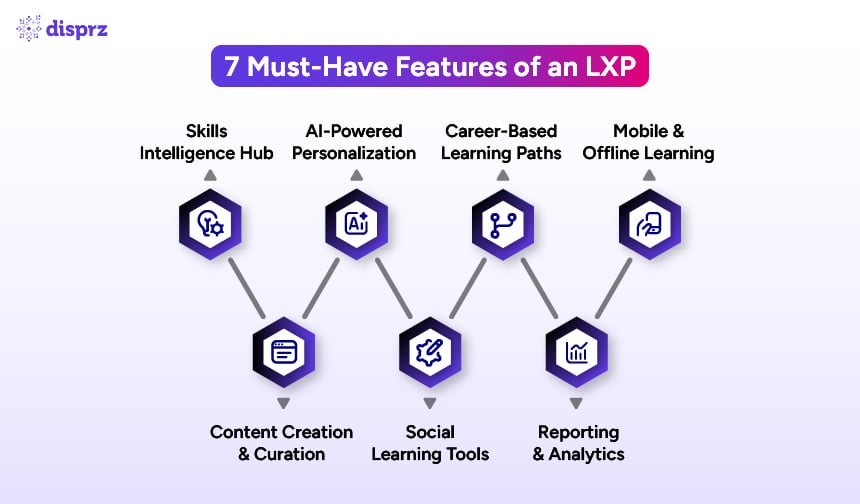
1. Skill Repository and Skills Intelligence
A strong enterprise LXP starts with a centralized skill repository. This acts as the foundation for personalized learning and workforce development.
The platform should map skills to job roles, assess employee proficiency levels, and identify skill gaps across the organization. This allows L&D teams to align learning initiatives with business priorities and workforce requirements.
With a skills-based approach, employees receive learning recommendations that help them build the capabilities needed for their current and future roles.
2. Content Creation and Content Curation
An effective LXP software platform should support both content creation and content curation.
L&D teams should be able to create learning content internally while also bringing together content from multiple external sources. This may include third-party content providers, online learning libraries, videos, articles, podcasts, and internal knowledge resources.
By combining different content sources into a single learning environment, organizations can offer learners a richer and more relevant experience.
3. AI-Powered Personalized Learning
Personalization is one of the defining characteristics of a modern LXP.
Using AI and learner data, the platform should recommend content based on each employee's role, skill gaps, learning history, career aspirations, and interests — this is the foundation of adaptive learning at scale.
As employees continue learning, recommendations should adapt automatically. This helps employees discover relevant content faster and improves overall learning engagement.
4. Social and Collaborative Learning
Learning often happens through conversations, knowledge sharing, and collaboration.
The best corporate learning experience platform solutions enable employees to share content, participate in discussions, ask questions, contribute expertise, and learn from peers. Social learning is particularly valuable for distributed and frontline teams that may not have regular access to classroom-based learning opportunities.
By encouraging knowledge sharing across the organization, an LXP helps create a continuous learning culture, where development becomes part of everyday work.
5. Learning Pathways and Career Development
Employees want clarity on how learning connects to career growth.
A modern LXP platform should support structured learning pathways aligned to specific roles, career tracks, and business goals. These pathways help employees understand what skills they need to develop and what learning activities will help them progress.
This creates a stronger connection between learning, performance, and career advancement.
6. Reporting and Analytics
Strong LXP reporting capabilities are essential for measuring learning effectiveness and demonstrating business impact.
A learning experience platform should provide visibility into learner engagement, login frequency, content consumption, completion rates, learning pathway progress, and skill development. Advanced platforms also offer skill proficiency dashboards and workforce readiness insights.
These analytics help L&D leaders identify what is working, optimize learning programs, and make data-driven decisions.
7. Mobile and Offline Access
Learning should be available wherever employees work.
For frontline, field, retail, manufacturing, and distributed teams, mobile access is often a requirement rather than a nice-to-have feature. The best LXP learning experiences are mobile-first, allowing employees to access training, assessments, and learning resources directly from their devices.
Offline access is equally important. Employees should be able to download content, continue learning without an internet connection, and sync progress automatically when they reconnect. This ensures consistent LXP training experiences across locations and working environments.
Together, these features help organizations deliver personalized, scalable, and measurable learning experiences that support both employee growth and business performance.
How an LXP Solves Common L&D Challenges in 2026
Many organizations invest heavily in learning programs but still struggle with low engagement, limited skill visibility, poor knowledge retention, and difficulty measuring impact.
A modern learning experience platform helps address these challenges by making learning personalized, continuous, and skills-driven. Here are some of the most common L&D challenges and how an LXP helps solve them.
1. Low Learner Engagement
The challenge:
Many employees view training as a mandatory task rather than an opportunity for growth. As a result, participation rates and learning adoption often remain low.
How an LXP helps:
An LXP platform uses AI-powered recommendations to deliver relevant content. Personalized learning platforms consistently show higher engagement and completion rates than generic training as they make it easier for employees to discover content they actually want to consume.
The outcome:
LinkedIn Learning reports that personalized learning recommendations significantly increase learner engagement and content consumption, helping employees spend more time learning and developing new skills.
2. Poor Knowledge Retention
The challenge:
Employees often forget much of what they learn when training is delivered as a one-time event.
How an LXP helps:
Modern LXP systems support microlearning, continuous reinforcement, and learning in the flow of work. Employees can access short, relevant learning resources exactly when they need them.
The outcome:
According to the Association for Talent Development (ATD), microlearning can improve learner engagement and reinforce knowledge retention by making learning easier to consume and revisit over time.
3. Limited Social Learning Across Teams
The challenge:
Valuable knowledge often remains locked within individual teams or experienced employees, making it difficult to scale expertise across the organization.
How an LXP helps:
A corporate learning experience platform enables social learning through discussion forums, user-generated content, peer recommendations, and collaborative learning communities.
This is especially valuable for distributed and frontline teams, where employees may be spread across multiple locations and have limited opportunities for face-to-face learning.
The outcome:
Organizations that encourage social learning often see faster knowledge transfer and stronger collaboration across teams.
4. Difficulty Identifying Skill Gaps
The challenge:
Many organizations lack visibility into the skills their workforce currently possesses and the skills needed for future business priorities.
How an LXP helps:
A modern enterprise LXP uses AI-powered skill gap analysis to map skills to roles, and identify capability gaps across the workforce.
The outcome:
L&D leaders gain clearer visibility into workforce readiness and can prioritize learning investments where they will have the greatest impact.
5. Slow Upskilling and Reskilling
The challenge:
As technologies and job roles evolve, employees need to acquire new skills faster than ever before.
How an LXP helps:
An LXP software platform recommends targeted learning based on identified skill gaps and career pathways. Employees receive personalized development opportunities instead of generic training programs.
The outcome:
According to LinkedIn's Workplace Learning research, organizations that prioritize skill development are better positioned to adapt to changing business needs and improve internal mobility.
6. Lack of Learning Data and Visibility
The challenge:
Many L&D teams struggle to demonstrate the effectiveness of learning programs using meaningful data.
How an LXP helps:
Advanced LXP reporting capabilities provide visibility into learner engagement, content effectiveness, learning progress, and skill development trends.
The outcome:
L&D leaders can make more informed decisions, improve program effectiveness, and better demonstrate learning impact to business stakeholders.
7. One-Size-Fits-All Learning Experiences
The challenge:
Employees have different roles, skill levels, learning preferences, and career goals. Yet many organizations continue to deliver the same learning experience to everyone.
How an LXP helps:
A learning experience platform personalizes learning journeys using AI, skills data, and learner behavior. Content recommendations evolve as employee needs change.
The outcome:
Employees receive more relevant learning experiences, leading to higher engagement, stronger skill development, and better learning outcomes.
As workforce skill requirements continue to change in 2026, organizations need learning systems that can adapt quickly. An LXP addresses the most common L&D challenges by connecting learning directly to skills, career growth, and business performance, making learning more relevant for employees and more measurable for L&D leaders.
How to Choose an LXP: Buyer's Checklist
The market is filled with LXP software, but not every platform will fit your organization's learning strategy, workforce needs, or technology ecosystem.
As you evaluate different LXP systems, focus on the capabilities that will drive long-term business value rather than simply comparing feature lists. The right LXP platform should support your learning goals today while helping you scale workforce development in the future.
Key Questions to Ask LXP Vendors
Before making a decision, ask potential vendors the following questions:
- Does the platform integrate with our HRMS, talent management systems, and existing LMS?
- How does the AI personalization engine recommend learning content and learning paths?
- Does the platform support skills mapping, skill gap analysis, and role-based learning journeys?
- What mobile learning and offline learning capabilities are available?
- What content sources can be integrated into the platform?
- Does the platform support user-generated content and social learning?
- How comprehensive are the analytics and LXP reporting capabilities?
- What is the typical implementation timeline and onboarding process?
- What level of customer support and ongoing success management is included?
The answers to these questions will help you compare vendors more effectively and identify which enterprise LXP is best aligned with your requirements.
LXP Pricing Models: What to Expect
Most LXP software providers use a quote-based pricing model, typically based on the number of users, learner volume, and platform capabilities required.
Several factors can influence the total investment, including:
- Number of active users
- Content library subscriptions and third-party content integrations
- Implementation and onboarding services
- Skills intelligence and AI capabilities
- Advanced analytics and reporting requirements
- Customer support and success packages
If you are evaluating multiple LXP platforms, consider requesting a pilot or proof of concept before making a long-term commitment. A pilot can help you assess learner adoption, user experience, integration capabilities, and business impact in a real-world environment.
Remember that the lowest-cost solution is not always the best choice. Focus on how well the platform supports your learning strategy, workforce development goals, and long-term growth plans.
Key Takeaways
- An LXP delivers personalized, AI-powered learning experiences aligned to employee skills, roles, and goals.
- Unlike traditional LMS platforms, an LXP platform focuses on continuous learning and skill development.
- The key benefits of a learning experience platform include higher engagement, better retention, and faster upskilling.
- Leading LXP systems combine skills intelligence, content curation, social learning, analytics, and personalization.
- The right enterprise LXP helps organizations build measurable workforce capabilities and improve business outcomes.
Conclusion
In 2026, a modern learning experience platform does much more than deliver training. It helps organizations create personalized, skills-driven, and mobile-first learning experiences that improve engagement, accelerate skill development, and provide measurable business impact.
As skill requirements continue to evolve, L&D leaders need learning technology that can adapt to changing workforce needs. The right LXP platform helps employees discover relevant learning, close skill gaps faster, and take ownership of their professional growth. At the same time, it gives organizations the visibility needed to make smarter talent and learning decisions.
Whether you are evaluating your first LXP, upgrading an existing learning ecosystem, or exploring an integrated LMS LXP approach, choosing the right platform can play a critical role in building a future-ready workforce.
About the authors

Madhu Karunakaran
Vice President - People & Culture
Madhu Karunakaran is a senior HR and Learning & Development (L&D) leader with 20+ years of experience spanning people strategy, organizational development (OD), talent management, leadershi...
Reviewed for accuracy on 15 Sep 2026